
The billionaire paradox
Are American tech billionaires adversaries or role models for Europe? Rebecca Christie writes that the EU should ask what it wants from globally influential tech magnates, not just how to curb them
Read more
Are American tech billionaires adversaries or role models for Europe? Rebecca Christie writes that the EU should ask what it wants from globally influential tech magnates, not just how to curb them
Read more
The EU’s AI Act was supposed to enter into full effect on 2 August 2026. But while the transparency layer has come into effect, its high-risk regime has been delayed. Marco Perugini argues that the result is a double bind in which Europe loses regulatory sovereignty whether it enforces its own rules or retreats from them
Read more
The Paris Agreement provides a framework for international carbon trading. Georg Zachmann and Annabelle Weisser discuss the many questions that will arise, and argue that international carbon credits can support the EU’s 2040 target if buyers’ club rules and leverage ensure real mitigation gains abroad
Read more
European banking remains fragmented, leaving billions of euros inefficiently allocated. Gyöngyi Lóránth, Anatoli Segura and Jing Zeng argue that a common deposit insurance system can encourage more risk-taking, but this should be accompanied by sufficiently strict supervision
Read more
EU banking rules are under pressure for simplification. Jesper Berg and Hans Geeroms argue that reforms should cut complexity without weakening financial safeguards
Read more
Digitalisation is reshaping how financial markets operate, says Christine Lagarde. For Europe, this is above all an opportunity to deepen integration, strengthen autonomy and anchor innovation in trusted public money across markets and payments
Read more
The central constitutional question for Europe is how sovereign democracies can govern common goods together without creating a sovereign European state. Hans Gersbach proposes reciprocal sovereignty as an answer
Read more
Europe faces unprecedented geopolitical and economic challenges, including high dependencies on external providers for energy, technology, security, and financial infrastructure. Frank Elderson argues reducing these dependencies is essential for safeguarding the European way of life
Read more
To secure the benefits of an EU-wide incorporation regime an EU Inc. plan for a common company regime should become more targeted and be underpinned by better system infrastructure, Fiona M Scott Morton and Reinhilde Veugelers argue
Read more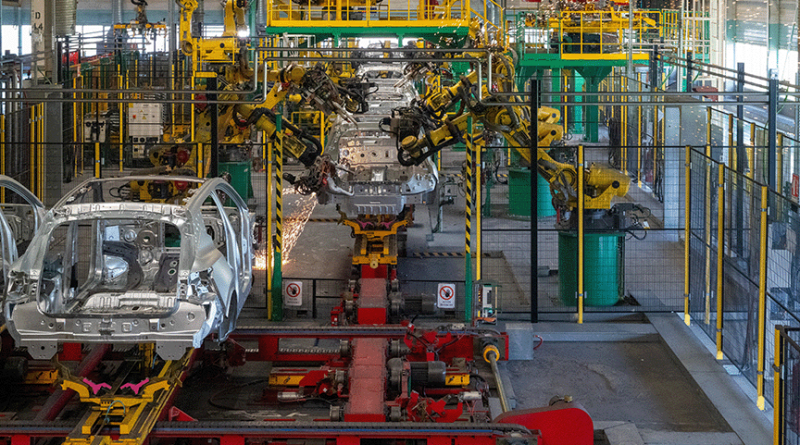
Europe is recalibrating its industrial policy in response to external challenges. Maive Rute, Frank Vandermeeren and Anca Dumitrescu investigate the goals of this recalibrated approach and the key components for success
Read more