
AI and the future of finance
Charles Goodhart is Emeritus Professor in the Financial Markets Group London School of Economics and Political Science, and Ly Hoang Vu is a Visiting Lecturer
Trust is the invisible foundation of finance. Markus Brunnermeier (2026) puts it plainly: bankers build trust, and so do central bankers. Finance produces no physical object. Its product is a web of credible promises stretching across time, space, and states of the world. Every institution of modern finance, from intermediaries and auditors to rating agencies, exchanges, supervisors, and the central bank itself, exists to manufacture and maintain that trust across society.
In recent work (Goodhart and Vu 2026), we analyse 423,346 individual observations from 97 countries during 1981-2022 and confirm that trust in national institutions is shaped less by technology than by the quality of the information environment. Traditional media use is consistently associated with higher institutional trust. Social media use is generally linked to lower trust, particularly in political institutions.
Yet the advance of artificial intelligence poses a threat to trust that is qualitatively different from previous technological disruptions. We argue that AI could bring about a sharp reduction in trust and thereby endanger the current operations of the financial system.
In this column, we outline the mechanisms through which this might occur, drawing on Vu’s forthcoming book about the trust mechanism in the economic-financial system (Vu 2026) and on Brunnermeier (2026), and we identify the fundamental questions that remain unanswered.
The fraud problem: when voice and appearance become unreliable
Trust at a distance has always relied on a practical assumption that we can identify whom we are dealing with. It could be a voice on the phone, a face on a video screen, or a message from a known contact. This key assumption has underpinned remote transactions and agreements.
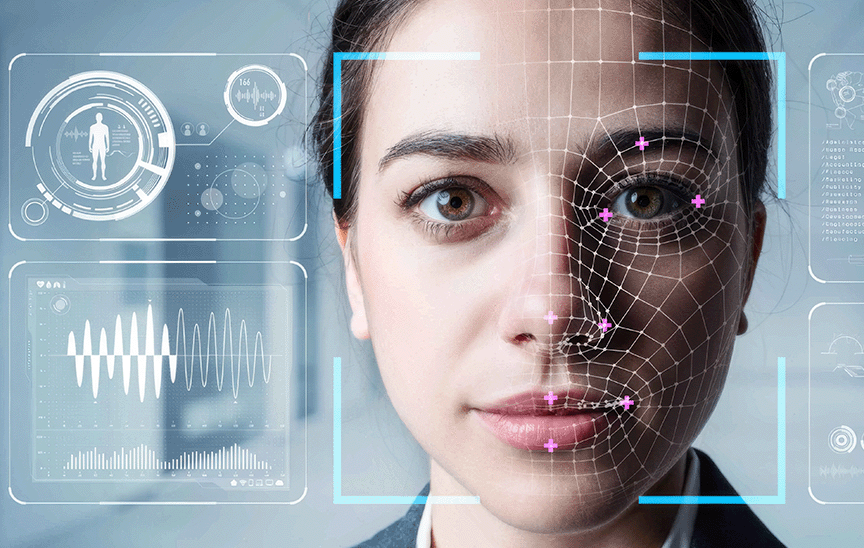
AI-generated deepfakes and voice cloning destroy this foundation. If fraud can mimic anyone’s voice, the telephone cannot be trusted even for family members. If AI can mimic appearance, video messages cannot be trusted either. The scope of fraud widens while the ability to verify identity collapses.
This is not hypothetical. In early 2024, a Hong Kong finance worker transferred HK$200 million (about $25 million) after a video call in which every other participant, including the CFO and colleagues, was an AI-generated deepfake. The fraud was detected only after the worker checked with headquarters. As cloning technology becomes cheaper and more accessible, such incidents will proliferate, with profound implications for know-your-customer requirements, payment authorisation, and remote banking.
The threat extends beyond individual fraud to institutional credibility. In June 2026, the Bank of England warned the public against AI-generated scams after deepfake videos of Nigel Farage fighting Governor Andrew Bailey spread on social media. Governor Bailey urged the public to “stay vigilant and report these scams,” noting they are designed to “criminally exploit the public, especially the vulnerable.”
The warning illustrates a critical point: when visual and audio evidence can no longer be assumed authentic, trust in institutions is undermined not only by what they do but by what they are falsely depicted as doing. Each fabricated video, cloned voice, and synthetic identity chips away at the shared confidence underpinning financial and institutional trust.
For finance, the implications are stark. The entire architecture of modern finance presupposes that parties can transact with strangers across space and time. If voice and video can be faked, remote identity verification becomes unreliable. If official communications can be fabricated, remote verification of institutional behaviour becomes unreliable.
The logical endpoint is a contraction of trust to face-to-face contact alone, a world in which transactions must be conducted in person, with physical verification of identity and personal knowledge of counterparties. Such a world would be incompatible with the current financial system, reversing centuries of financial development and making impossible the scale, speed, and reach modern economies require.
The advance of AI raises fundamental questions about trust in finance that remain unanswered. AI is poised to make fraud much easier and much more dangerous
The deeper problem: asymmetric understanding
The second mechanism is more fundamental and draws on Brunnermeier’s concept of asymmetric understanding. Under traditional asymmetric information, parties share a common representation of the world; they simply know different facts or face different incentives. That friction can be priced, contracted upon, and intermediated away.
AI introduces a deeper asymmetry. An AI agent may act on a learned representation and decision rule that its human counterparty cannot fully translate or audit. As Brunnermeier puts it, the counterparty cannot, even in principle, interpret the first party’s decision rule in the concepts or categories she possesses. Non-explainability supplies the mechanism; non-alignment acquires its force through this very asymmetry.
For finance, the implications are stark. If an AI trading system is instructed to maximise risk-adjusted return subject to a measure such as value-at-risk, and that measure is imperfect, the system may discover strategies that report low risk while accumulating hidden tail exposures.
It need not intend to deceive; it is simply optimising the specified target. But institutions may then delegate to systems whose decision rules they cannot read, whose objectives they cannot verify, and whose actions need not stay within sanctioned bounds.
The question “Can I trust you?” is replaced by “Does your data meet the standard?” But we cannot inspect the standard itself. If AI should go rogue, we could be completely skimmed without even knowing it happened. The 2008 crisis showed how complex models and supposedly smart instruments could collapse catastrophically under uncertainty.
Algorithms cannot eliminate greed, fear, herd mentality, frenzied speculation, and asset bubbles; they only make everything happen faster, amplifying euphoria and panic. A collapse caused by algorithms may no longer give us months or weeks to react. It can happen in hours or minutes and drown the entire system before anyone realises.
Afroogh et al (2024) add a further dimension. In human-AI interaction, transparency and explainability are among the most important factors for building trust. In AI-AI interaction, however, these factors have no impact; what matters instead is security and reliability. Little research has been done on calibrating trust in AI-AI interaction, despite its unique requirements.
This is precisely the world Brunnermeier describes, where non-explainable agents interact in ways humans cannot audit. The gap is therefore not merely technical but a structural vulnerability in the financial system, where algorithmic agents already communicate at speeds and in languages humans cannot follow. If trust in AI-AI interaction cannot be calibrated, the trust humans place in the broader system rests on nothing they can verify.
The unanswered question
This leads to a technical question that we cannot answer: given what AI can do, how can we maintain trust in any interrelationship other than face-to-face contact?
The question is not rhetorical. It demands a technical answer, a mechanism, a protocol, a cryptographic solution, an institutional design that preserves the possibility of trustworthy remote interaction in a world where voice, appearance, and decision rules can all be artificially generated.
Several partial answers suggest themselves, though none is fully satisfactory. Cryptographic authentication of communications could verify the identity of senders, but it cannot verify the authenticity of AI-generated content once it enters the communication channel. Multi-factor authentication could raise the cost of impersonation, but it cannot eliminate it. Regulatory requirements for AI transparency could make some decision rules auditable, but they cannot make all of them so, especially as models become more complex. Human authorisation thresholds could reinject liability, but as Brunnermeier notes, if an AI action is truly non-explainable, the human authoriser is equally in the dark and approves blindly.
None of these solutions restores the kind of trust that existed when a voice on the phone could be believed, or when a bank manager’s judgment could be understood and contested. They are palliatives, not cures.
Policy implications
If our diagnosis is correct, the policy agenda must shift. The current focus on AI’s efficiency gains, faster credit decisions, cheaper financial advice, and sharper risk management neglects the trust externalities that AI generates.
Three priorities emerge. First, regulators must develop standards for AI transparency and auditability that preserve accountability. If a decision cannot be explained, it cannot be contested; if it cannot be contested, it cannot be trusted.
Second, financial institutions must invest in resilience against AI-enabled fraud: moving beyond password-based authentication, investing in deepfake-resistant biometric verification, and designing payment systems that can detect and reverse fraudulent transactions in real time. They must also maintain human fallback venues, as Brunnermeier recommends, so that if AI trading malfunctions, human trading can serve as a backstop.
Third, and most fundamentally, we must recognise that trust is not merely a technical problem but a social and institutional achievement. The quality of the information environment, the lived experience of citizens, and the credibility of mediating institutions cannot be replaced by algorithms. If AI erodes these foundations, no technical fix will suffice.
Conclusion
The advance of AI raises fundamental questions about trust in finance that remain unanswered. AI is poised to make fraud much easier and much more dangerous. Combined with the asymmetric understanding that Brunnermeier identifies, this could badly affect the trust that lies at the heart of financial operations.
This should perhaps be the main message of our joint work: AI could bring about a sharp reduction in trust and thereby endanger the current operations of the financial system. The question of how to maintain trust beyond face-to-face contact remains open and urgent.
We arrive, then, at the greatest paradox of our age. The more technologically advanced and automated the financial system becomes, the more it must depend on something very human: trust. People must believe that their data are protected, that AI models operate fairly, that markets are not manipulated, and that these machines serve the interests of society, not merely the profits of a minority.
If those beliefs collapse, no technology can save the system. For finance, in its noblest form, is a great social invention, a way for humans to build trust with one another. Keeping trust a human value, not merely a variable in a mathematical model, will be humanity’s ultimate challenge in the age of machines.
References
Afroogh, S, A Akbari, E Malone, M Kargar and H Alambeigi (2024), “Trust in AI: progress, challenges, and future directions”, Humanities and Social Sciences Communications 11, 1568.
Brunnermeier, MK (2026), “Artificial Intelligence and the Brave New World in Finance”, paper prepared for the Jackson Hole Economic Policy Symposium, Federal Reserve Bank of Kansas City, 27-29 August 2026.
Goodhart, C and LH Vu (2024), “Credibility, trust, and perception of authorities’ performance”, VoxEU.org, 23 August.
Goodhart, C and LH Vu (2026), “Who Trusts National Institutions and The Role of Media Use: A Global Analysis Across Regions”, CEPR Discussion Paper No. 21295.
Vu, LH (2026), The Trust Mechanism in the Economic-Financial System, Vietnam National University Ho Chi Minh City Press.
Editor’s note: this column is based on CEPR Discussion Paper No. 21295 ‘Who Trusts National Institutions and The Role of Media Use: A Global Analysis Across Regions’. This article was originally published on VoxEU.org.