Reciprocal sovereignty
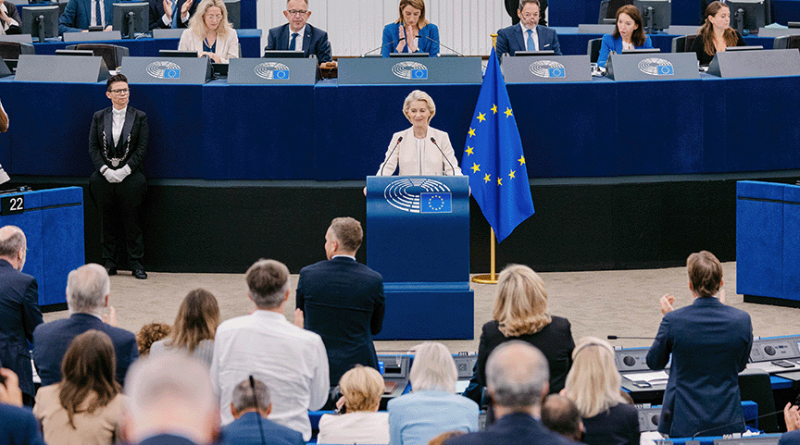
The central constitutional question for Europe is how sovereign democracies can govern common goods together without creating a sovereign European state. Hans Gersbach proposes reciprocal sovereignty as an answer
Read moreThe central constitutional question for Europe is how sovereign democracies can govern common goods together without creating a sovereign European state. Hans Gersbach proposes reciprocal sovereignty as an answer
Read moreEurope faces unprecedented geopolitical and economic challenges, including high dependencies on external providers for energy, technology, security, and financial infrastructure. Frank Elderson argues reducing these dependencies is essential for safeguarding the European way of life
Read moreLaurence B Mussio and Paul Samson explore how the ledger has proven more sovereign and powerful than the sword. In today’s era of digital currencies and evolving geopolitics around payment systems, they illuminate how global power will continue to rest with those who control the ledger
Read moreTo secure the benefits of an EU-wide incorporation regime an EU Inc. plan for a common company regime should become more targeted and be underpinned by better system infrastructure, Fiona M Scott Morton and Reinhilde Veugelers argue
Read moreThe WTO is experiencing a serious crisis arising from tensions that are internal to the global trading system. Ignacio García Bercero identifies four critical areas for WTO reform to reinforce the rules-based trading system
Read moreAndrew Bailey highlights how UK economic growth has slowed since the Financial Crisis. He examines AI and suggests gains may take time, depend on complementary innovation, and bring uncertain effects on jobs, making investment in skills essential
Read moreAs technology evolves, Sarah Breeden sets out the Bank of England’s vision for UK finance: a robust, multi-money retail payments system that promotes greater competition and innovation, and a multi-asset, multi-currency approach to tokenising the markets of the UK’s global financial centre
Read moreThe Iran energy shock is a test of European discipline on state aid. Roel Dom and Simone Tagliapietra argue that the latest EU temporary state-aid framework is needed to shield industries and consumers from short-term costs, but should not become more permanent
Read moreThe US–Iran relationship appears to be at its lowest point in decades. Simon Johnson and Amir Kermani describe how the twin blockades of the Strait of Hormuz create the possibility of a time-consistent agreement linking the nuclear issue, sanctions relief, and uninterrupted navigation
Read moreGlobal efforts to tackle the climate and nature crises have not progressed as hoped, says Christine Lagarde. This sharpens the case for deeper analysis from the research and central banking communities to better understand the risks to price and financial stability
Read more