
This week’s featured stories 14 September – 20 September 2026…
Money and power: lessons from history for stablecoins and US dollar dominance
Carolyn Wilkins considers what could happen if US dollar stablecoins become widely used, and what that could mean for the future of international monetary power
World leaders return to UN as Iran war, Ukraine and AI dominate agenda
Leaders gather in New York for the UN General Assembly with the US–Iran conflict, Ukraine’s war, Red Sea shipping risks and AI safety all in focus
If big tech slows AI down, how should ASEAN respond?
Calls from major AI firms to slow frontier development pose a genuine dilemma for Southeast Asia. Karryl Kim Sagun Trajano argues that the region should push for a say in shaping any international AI slowdown agreement, using any pause to invest in evaluation capacity, data governance, and collective bargaining power over compute
The final chapter on modernizing bank regulatory stress testing
Michelle Bowman says overhaul of bank stress test will make process more transparent and the results more predictable for lenders, handing the industry long-sought reforms to the exam process
More flexibility needs greater accountability: defence in the 2028-2034 EU budget
EU defence funding is set to grow in the next spending cycle, making better accountability essential before final budget rules are agreed
The International Tax Conference, co-organised with Business at OECD, BusinessEurope and the International Chamber of Commerce under the theme ‘The Future of International Taxation – Level Playing Field or Battlefield’, highlighted that effective international tax cooperation must balance governments’ revenue objectives with businesses’ need for long-term certainty, simplicity, and predictability
The Xi-Modi meet: two tracks, three mutuals, and a new India-China equation
As India and China cautiously rebuild ties, Kalpit A Mankikar discusses how their competing approaches to border stability, economic re-engagement, and the sequencing of normalisation will shape the next phase of the relationship
Export control: compliance enforcement trends in the UK and EU
There is a growing trend for export control authorities across Europe to increase focus on what happens after an export licence is issued. Steven Farmer, Iris Karaman and Katy Burgess advise on what businesses should do next
Data centres are laying the next financial mine
Yash Kalash argues that the AI infrastructure boom is creating financial transmission mechanisms reminiscent of past crises—not because AI will fail, but because its financing may not endure long enough to repay the infrastructure built around it
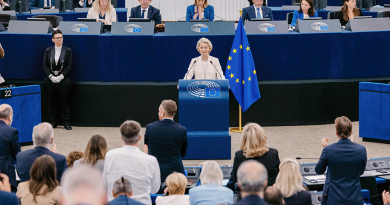
In the State of the Union address, Ursula von der Leyen shared the key priorities and flagship projects for the year to come, building on the progress the EU has made in recent years and setting out the priorities for the year ahead and her vision for a stronger, more independent and resilient European Union
A new age of capital: growth, sovereignty and AI
AI is the project that could drive European capital markets forward to channel savings where they are needed, says Christine Lagarde. It needs capital on a scale that only markets can provide, and the stakes for Europe could hardly be higher
Some questions that a Bank of England review should ask
As the Bank of England nears 30 years of operational independence, a broad review is likely. Sushil Wadhwani proposes five measures to reduce future quantitative-easing losses and, as markets still doubt the Bank will meet its inflation target two years after the Bernanke Review, steps to strengthen credibility