Testing EU discipline on state aid
Roel Dom is a Research Fellow and Simone Tagliapietra a Senior Fellow, both at Bruegel
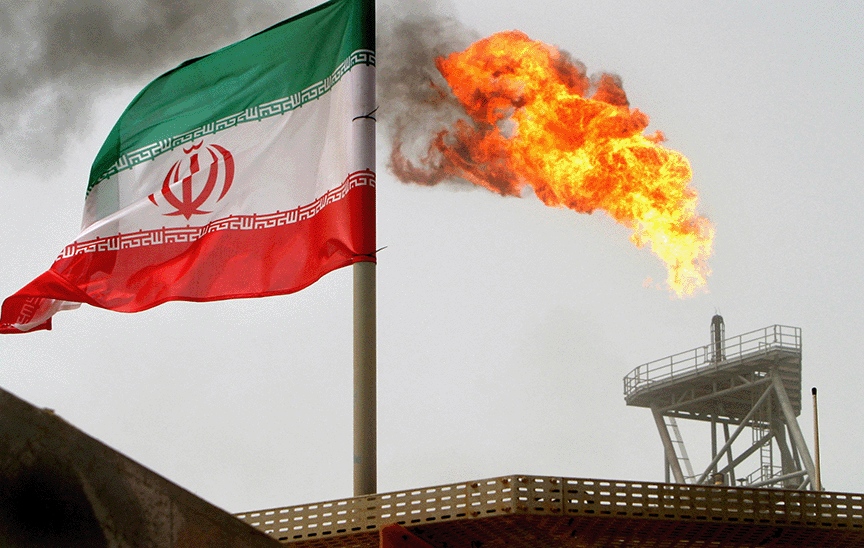
On 29 April, the European Commission published a new temporary state aid framework intended to enable European Union countries to ramp-up support to sectors severely exposed to the oil and gas crisis triggered by the war in Iran. The framework, known as METSAF (Middle East Temporary State Aid Framework) will be in place until 31 December 2026.
METSAF permits support for agriculture, fisheries and aquaculture, land transport (road, rail, inland waterways) and intra-EU short-sea shipping. These sectors are deemed unable to switch fuels at short notice, and to operate on margins that are too thin to absorb the shock. They also face regulatory or seasonal constraints, such as fishing quotas and agricultural cycles, which prevent demand-side adjustment. They have market structures that make it hard to pass on price increases to customers.
For these sectors, aid under METSAF can be provided to cover up to 70% of extra costs arising from the crisis, with simplified computations for small amounts of aid (up to €50,000).
METSAF also amends temporarily another set of state-aid rules, the Clean Industrial Deal State Aid Framework (CISAF). The amendment raises permissible compensation for energy-intensive industries facing high energy costs from 50% to 70% of the average wholesale electricity price, limited to 50% of the beneficiary’s total consumption. Importantly, no additional increase in decarbonisation efforts is required.
METSAF is in fact the fourth EU temporary framework since 2020 that loosens state-aid rules following a shock. It follows the COVID-19 Temporary Framework, the Temporary Crisis Framework (TCF) after Russia’s invasion of Ukraine, and the Temporary Crisis and Transition Framework (TCTF). CISAF made some elements of these frameworks permanent.
The Commission must commit credibly to the December 2026 sunset date for METSAF. The tendency for previous temporary frameworks to persist makes a firm commitment necessary. Any prolongation should be clearly justified and strictly conditional on the persistence of the underlying shock
The METSAF amendment to CISAF raises two closely related concerns. First, under CISAF, compensation for energy costs was conditional on firms investing in decarbonisation. By increasing compensation levels without increasing decarbonisation requirements, METSAF misses an opportunity to align short-term relief with long-term transition objectives.
Second, the amendment distorts the price signal. Higher energy prices, whether structural or shock-driven, incentivise lower consumption and energy efficiency investment. By compensating industry for a large portion of these costs, METSAF dampens these incentives.
In addition, while METSAF contains no tax provisions, it recalls that EU countries may reduce fuel excise duties within existing minima without state-aid notification. Subject to approval by the Council of the EU, duties may even be below the minima. So far, most Iran conflict-related support is being spent on untargeted measures. This effectively signals acceptance of fuel tax cuts as part of the crisis response, further weakening energy price signals across the economy.
Providing even more cushioning to energy-intensive firms to isolate them from energy price signals could worsen the energy crisis by artificially sustaining demand at a time of supply constraints. It could result in households paying even more for their energy supply relative to industry.
It could also further fragment the single market by triggering subsidy races or imbalances between EU countries, as seen during the 2022 energy crisis and in the first year of CISAF. France and Germany account for more than half of the approved budget so far; Hungary’s approved measure represents close to 2% of GDP. Finally, more aid for energy-intensive firms could delay Europe’s transition to clean electrification.
However, through its food and transport measures, METSAF also gives EU countries the tools to cushion short-term costs for vulnerable industries and consumers. It is now up to EU governments to use this flexibility responsibly. They should think twice before dishing out subsidies that require no decarbonisation in return and trigger subsidy races. EU countries should keep support targeted, temporary and conditional on credible decarbonisation commitments.
Finally, the Commission must commit credibly to the December 2026 sunset date for METSAF. The tendency for previous temporary frameworks to persist makes a firm commitment necessary. Any prolongation should be clearly justified and strictly conditional on the persistence of the underlying shock.
If extended, METSAF’s scope should in principle be narrowed, not broadened, unless the worsening of the shock clearly justifies targeted adjustments.
This article is based on a Bruegel First Glance.